01
The state is built for cattle, and it is not an accident
Nebraska runs more cattle than it has people, and has done for a long time. The Sandhills in the centre and west are close to useless for row crops and close to ideal for grazing — grass on stabilised dune, too fragile to plough, perfect to run cows on. East and south of that is some of the best corn ground in the country.
Put those two next to each other and you get what the state actually has: calves raised on grass, finished on grain grown within a short haul, and processed nearby. Most beef in America has travelled further between those steps than most people would guess.
The herd behind this building02
What grass and grain each do to a steak
Grass early builds the animal. Grain at the end builds the marbling — the intramuscular fat that melts during cooking and is most of what people mean when they say a steak tasted rich. Corn-finished beef is more marbled and milder; purely grass-finished beef is leaner and more mineral, and cooks faster than people expect.
Neither is better in the abstract. But a steakhouse that leans on marbling is making a choice about the finish, and it is fair to ask what that choice was rather than accept "premium" as an answer.
How ours is finished03
What dry aging actually does — and what it does not
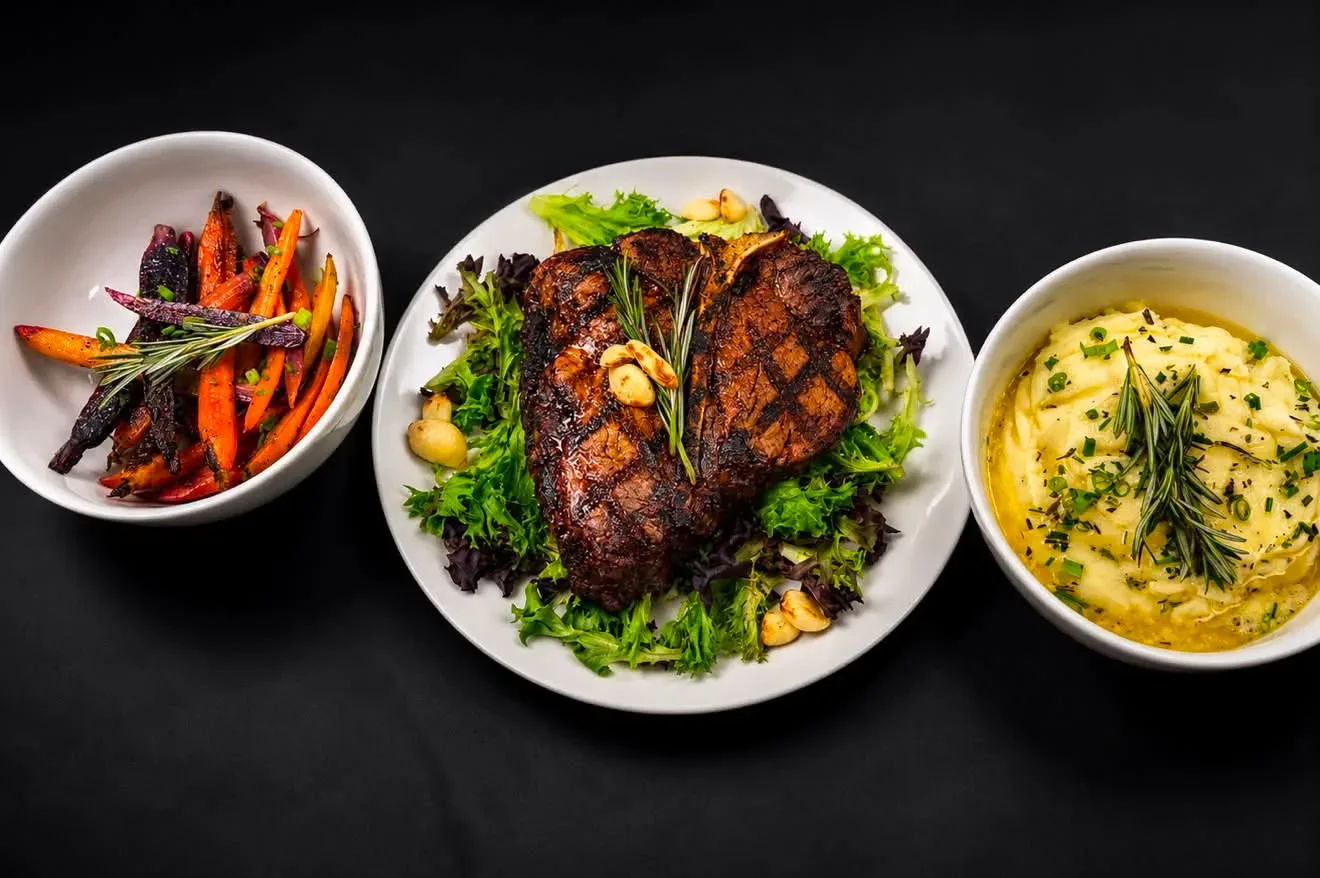
Dry aging is a whole cut left in controlled cold air instead of a vacuum bag. Two things happen. Moisture evaporates, so what is left is a concentrated version of the same beef — that is where the deeper, nuttier flavour comes from. And the meat’s own enzymes keep working on the connective tissue, which is where the texture comes from.
What it does not do is rescue an ordinary animal. Aging concentrates what is already in the beef, including the parts you would rather it did not, and the trim loss is real: the dried outer crust is cut away and thrown out before anything is portioned. That is why dry-aged steaks cost what they cost, and why a restaurant doing it in volume on cheap beef would be making an expensive mistake.
Aging concentrates what is already there. It cannot put something in the beef that the animal never had.
What’s on the menu04
“Owner-raised” is doing real work in that sentence
Most steakhouses buy beef. A distributor sources it, and the restaurant chooses a grade and a cut. That is a perfectly respectable way to run a kitchen and it is what almost everyone does.
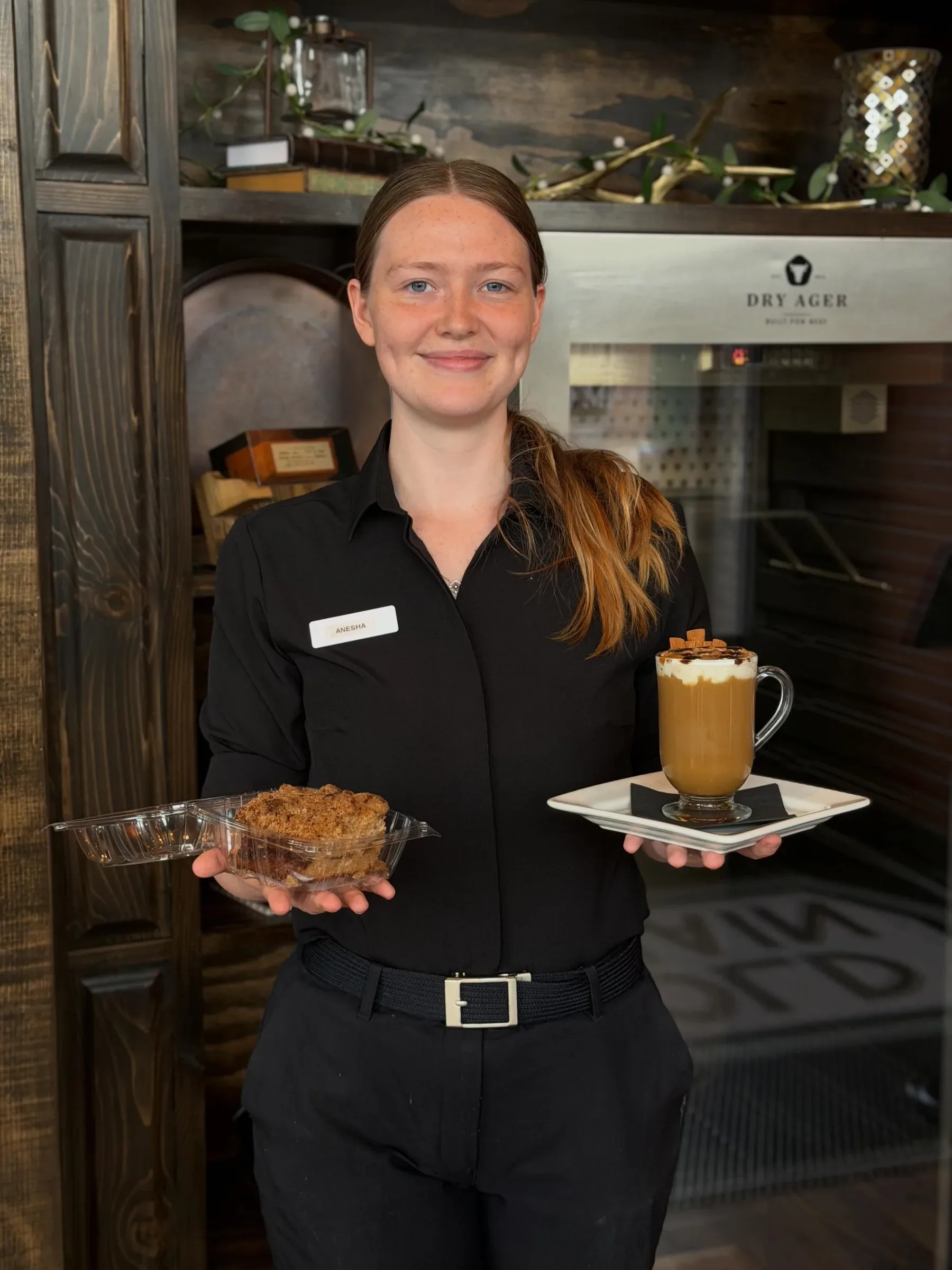
Here the cattle are the owners’ own, raised on a family operation a few miles from the dining room, and the aging cabinet is not in a back cellar — it stands inside the front door where every guest walks past it. A restaurant that puts its aging cabinet in the entrance has decided to be judged on it, which is the part that matters.
The beef program05
How to buy it for your own freezer
The same herd is sold direct — quarters, halves and freezer boxes, cut and wrapped, collected at the restaurant in Crete. It is the cheapest way per pound to eat this particular beef, and it is a different transaction from dinner: you are buying an animal’s worth of cuts, not a plate.
Weights, cut sheets and current availability change through the year, so the beef page takes an inquiry rather than publishing a number that would be out of date by the time you read it.
Buy our beef